

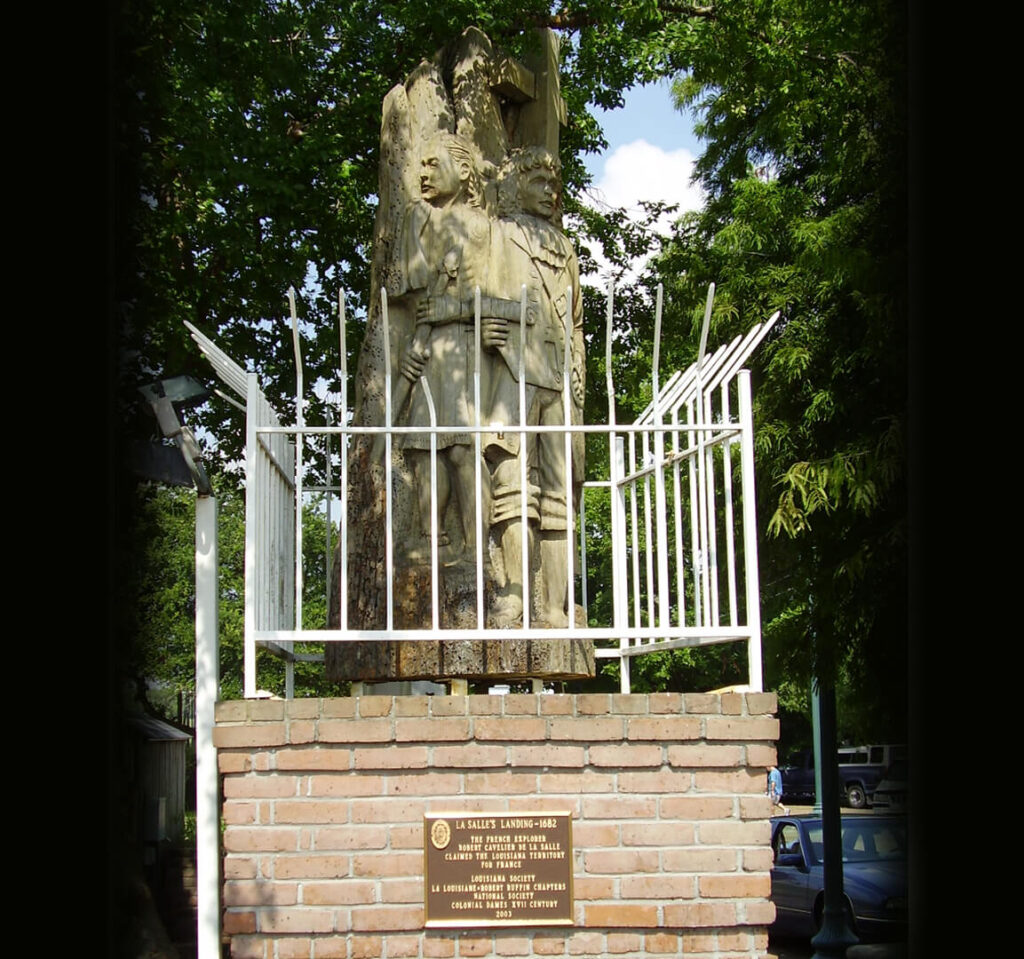
LaSalle’s Landing – 1682
Significance:
The LaSalle’s Landing Monument is significant for several key reasons:
- Commemoration of a Key Historical Event: It marks the historical site believed to be where the French explorer René-Robert Cavelier, Sieur de La Salle, first landed in this area of Louisiana. LaSalle’s expeditions were crucial in claiming the Mississippi River basin for France in the late 17th century. This landing was a significant step in the European exploration and colonization of the region.
- Foundation of Louisiana History: LaSalle’s claim laid the groundwork for the establishment of the French colony of Louisiana, which had a profound and lasting impact on the cultural, linguistic, and legal landscape of the state. Commemorating his landing acknowledges the European roots of Louisiana’s history.
- Local Historical Identity: For the city of Kenner, the monument provides a direct link to a major historical event that shaped the broader region. It contributes to Kenner’s unique local identity and highlights its place within the larger narrative of Louisiana’s past.
- Educational Value: Located in Heritage Park, the monument serves as an educational tool for residents and visitors, offering a tangible connection to the early history of the area. It encourages learning about the era of exploration and the European presence in North America.
- Preservation of Historical Memory: By erecting a monument, the community ensures that this important historical event is remembered and honored for generations to come. It acts as a focal point for reflection on the past.
- Tourism and Heritage: The monument can be an attraction for those interested in history and heritage tourism, drawing visitors to Kenner and the Heritage Park.
The LaSalle’s Landing Monument in Kenner’s Heritage Park is a significant landmark that commemorates a pivotal moment in the early history of Louisiana – the landing of the French explorer LaSalle. Its location within a historical park underscores its educational and cultural importance to the local community and the broader historical narrative of the state.