

Camp Parapet Day
Education During the 1860s: A Glimpse into Civil War Era Schools
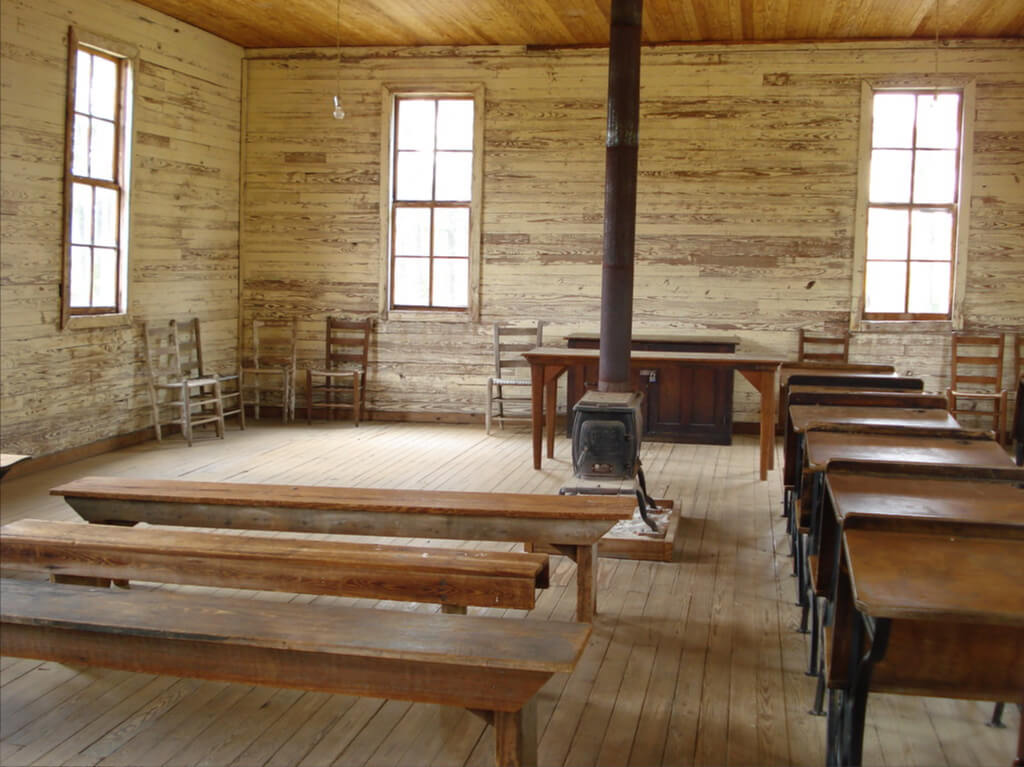
Education was a significant topic during the Civil War era. Schools were primarily run by local church congregations and civic-minded citizens in communities across the nation. Teachers largely determined the curriculum and daily instruction, rather than a local school board.
School schedules were often dictated by the agricultural economy in both the North and the South, with children excused from school during months when their labor was needed in the fields. The modern practice of extended summer breaks is a direct result of this historical practice.
Classrooms were typically small, often housing several grade levels in a single room. Testing was frequently oral, emphasizing memorization and recitation over writing. The phrase “toeing the line” may have originated from the practice of students standing on a line on the floor while reciting their lessons.
While students generally attended school for fewer years than modern students, a survey of textbooks from the period reveals that their reading materials advanced through several modern grade levels each year. By the fifth year of school, students were reading material considered college level today.
Beyond common schools, academies offered intensive educational experiences for boys and girls aged thirteen to twenty. Children from wealthy families might board at these academies, while others attended as day students. These institutions offered a wide range of classes, including Greek, Latin, French, German, Italian, Spanish, chemistry, natural philosophy, and astronomy, with boys and girls typically kept separate.
Spencerian Script: The Standard of American Penmanship
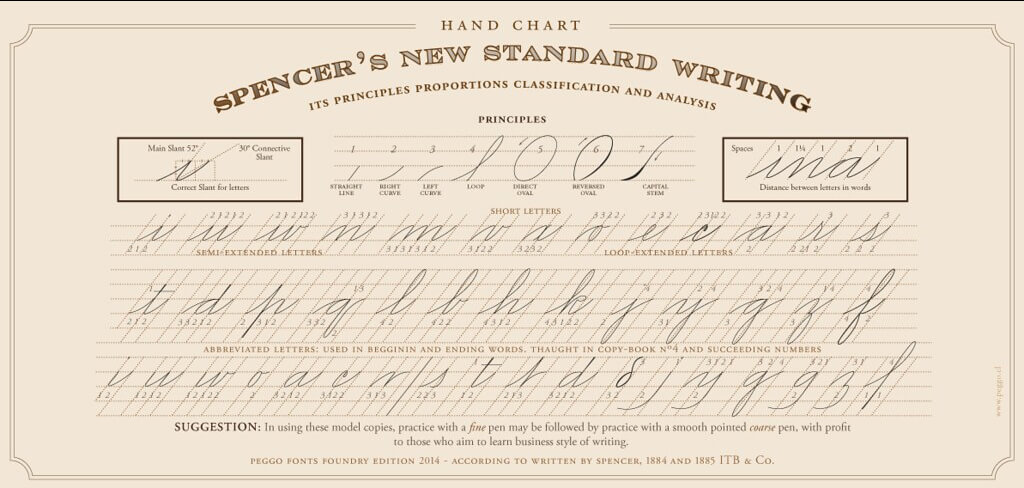
Spencerian Script was a dominant writing style in the United States from approximately 1850 to 1925. It was considered the de facto standard for business correspondence before typewriters became widespread. Platt Rogers Spencer developed this unique oval-based penmanship style, drawing inspiration from existing scripts. His goal was to create a style that was both quick and legible for business communication and elegant for personal letters.
Developed in 1840, Spencerian Script was first taught in a school established specifically for that purpose. Graduates from Spencer’s school went on to create similar institutions, spreading the script to common schools. Although Spencer himself passed away in 1864, his sons continued his mission by distributing his previously unpublished book, Spencerian Key to Practical Penmanship, in 1866. Spencerian Script became the national standard until the 1920s, when the rise of the typewriter made it less crucial for business communication.
Influential Textbooks: The Blue-Back Speller and McGuffey Readers
Two of the most influential school books in American history are the 18th-century New England Primer and the 19th-century McGuffey Readers.
The Blue-Back Speller (Noah Webster)
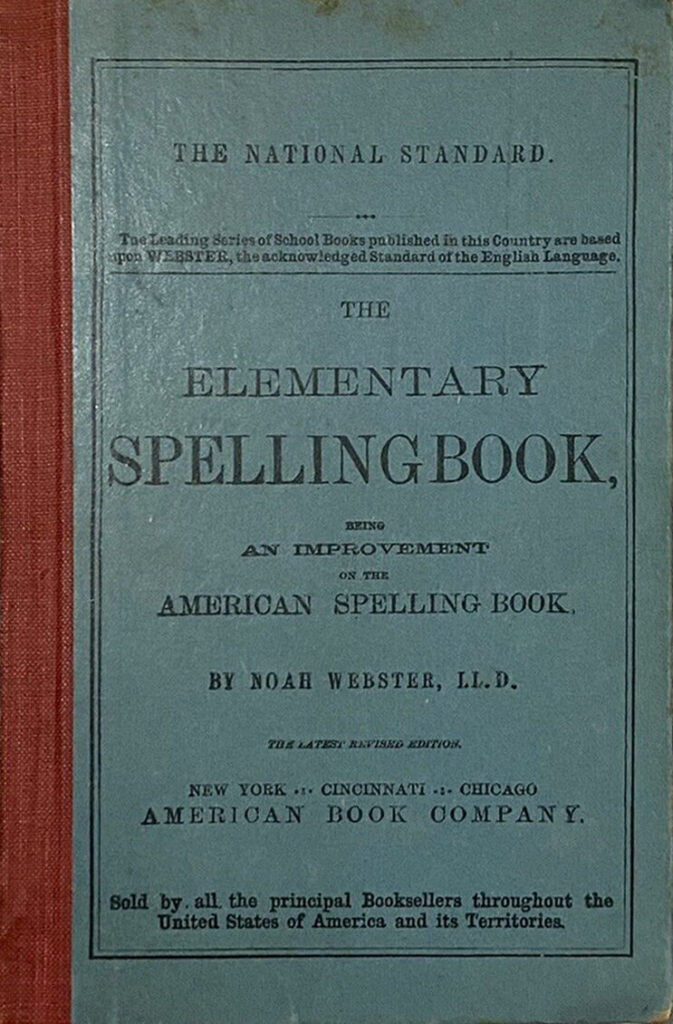
Noah Webster, a Yale graduate and ardent patriot, had a vastly greater impact on literacy than earlier authors. His work, A Grammatical Institute of the English Language, Part I, II and III, published between 1783 and 1785, included a speller, a grammar, and a reader. Spelling books were designed to teach reading through the alphabet method of oral spelling, while readers were collections of essays, sermons, speeches, and poems for children who could already read. Webster aimed to unify the new nation with a single system of pronunciation through his speller, using numerical superscriptions to indicate vowel pronunciations.
Initially, Webster’s speller was criticized for not introducing actual reading passages until page 101. In response, his revision, The American Spelling Book (1787), moved reading lessons up to page 43, starting with the famous line, “No man may put off the law of God”. Due in part to Webster’s promotional skills, The American Spelling Book quickly became a bestseller.
In 1829, after publishing his famous American Dictionary, Webster issued the final revision of his speller, The Elementary Spelling Book, which became known as the “Blue-Back Speller” due to its familiar blue covers. Though overseen by Webster, much of this book was written by New York teacher Aaron Ely. The Elementary introduced changes that distinguish American from British spelling, such as “labor” instead of “labour” and “center” rather than “centre”. Of all Webster’s books, only the speller had a long-term market presence, dominating the field from 1790 through the Civil War era and selling approximately 70 million copies into the 20th century. An estimated 200 million Americans learned to read and write using the Blue-Back Speller and the McGuffey Eclectic Spelling Book.
McGuffey Readers
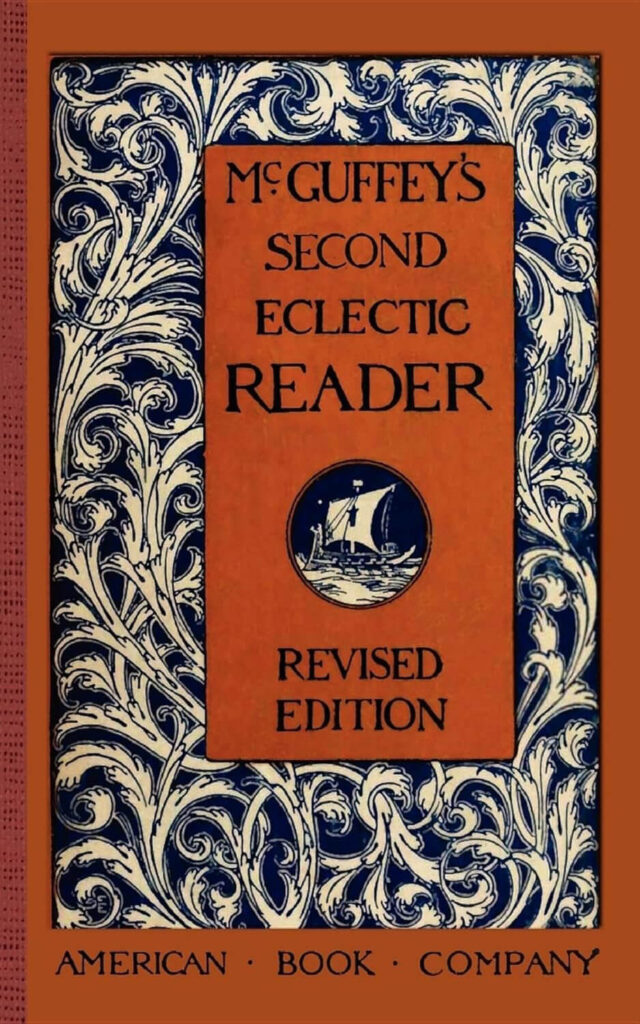
McGuffey’s Readers were even more popular and widely used than the New England Primer. It’s estimated that at least 120 million copies were sold between 1836 and 1960, placing their sales in a category with the Bible and Webster’s Dictionary. Since 1961, they have continued to sell at a rate of about 30,000 copies per year. They are still used today in some school systems and for homeschooling.
The author, William Holmes McGuffey, was born in Pennsylvania in 1800 and moved to Ohio in 1802. His family, immigrants from Scotland, held strong religious beliefs and a belief in education. McGuffey was passionate about educating young minds and preaching the Gospel, possessing a remarkable ability to memorize entire books of the Bible. He became a “roving” teacher at age 14, starting with 48 students in a one-room school. Teachers in one-room schools often faced challenges such as large class sizes and students ranging in age from six to twenty-one. McGuffey often worked 11 hours a day, 6 days a week, primarily in frontier schools in Kentucky. Students often brought their own books, most frequently the Bible, as few textbooks existed.
McGuffey received an excellent classical education and graduated from Washington College in 1826. He then became a Professor of Languages at Miami University in Oxford, Ohio. In 1835, Truman and Smith, a Cincinnati publishing firm, asked McGuffey to create a series of four graded readers for primary students. He was recommended for the job by his longtime friend, Harriet Beecher Stowe. McGuffey completed the first two readers within a year, receiving a fee of $1,000. While William McGuffey compiled the first four readers (1836-1837 edition), his brother Alexander created the fifth and sixth during the 1840s. The series included stories, poems, essays, and speeches, with advanced readers featuring excerpts from notable writers like John Milton, Daniel Webster, and Lord Byron.
The McGuffey Readers reflected McGuffey’s personal philosophies and his early experiences as a frontier schoolteacher. They were more than just textbooks; they helped shape the country’s morals, tastes, and the American character. The lessons promoted standards of morality and societal values across the United States for over a century. They addressed children’s natural curiosity, emphasized work and an independent spirit, and encouraged allegiance to country and an understanding of religious values. The readers were filled with stories of strength, character, goodness, and truth, presenting contrasting viewpoints and drawing moral conclusions, particularly about lying.
The Dunce Cap: A Form of Humiliation

The “dunce cap” was a tall, pointed hat, sometimes bearing the letter “D” or the word “DUNCE,” conspicuously placed on a stool in the corner of a classroom. Students who were slow at learning were made to stand in the corner wearing this hat, often subjected to mockery from the teacher and other pupils. While this seems cruel by modern standards, Victorians believed that all pupils were equally capable of learning, and a slow student was perceived as deliberately lazy or reluctant to learn. The “dunce” would remain in the corner, sometimes standing on the stool, until the end of classes. If a student gave a wrong answer or wasn’t studying to the schoolmaster or schoolmistress’s satisfaction, they might find themselves at the front of the room wearing this hat. The dunce cap served as punishment through humiliation, aiming to embarrass students into behaving correctly. The word “dunce” originates from Johannes Duns Scotus, a brilliant 13th-century Franciscan friar, philosopher, theologian, and professor at Oxford, Cambridge, and Paris.
The Engineers at Camp Parapet
MILITARY ENGINEERS
The summer of 1861 found New Orleans defended from an attack and invasion by a Federal Navy from the Gulf of Mexico and Lower Mississippi River by the massive fortifications of Forts Jackson and St. Phillip, fifty miles below the city. With this approach considered safe from a Yankee assault, the citizens of New Orleans turned their eyes to what they believed the most likely direction of an attack… by United States gunboats coming down the Mississippi River from St. Louis and beyond.
To protect New Orleans, the City’s Committee of Defense determined to construct fortifications upriver from New Orleans. The proposed site was adjacent to Carrollton, Louisiana, which was at that time the seat of government for Jefferson Parish. Entrusted with the responsibility for designing the fortifications was Benjamin Buisson.
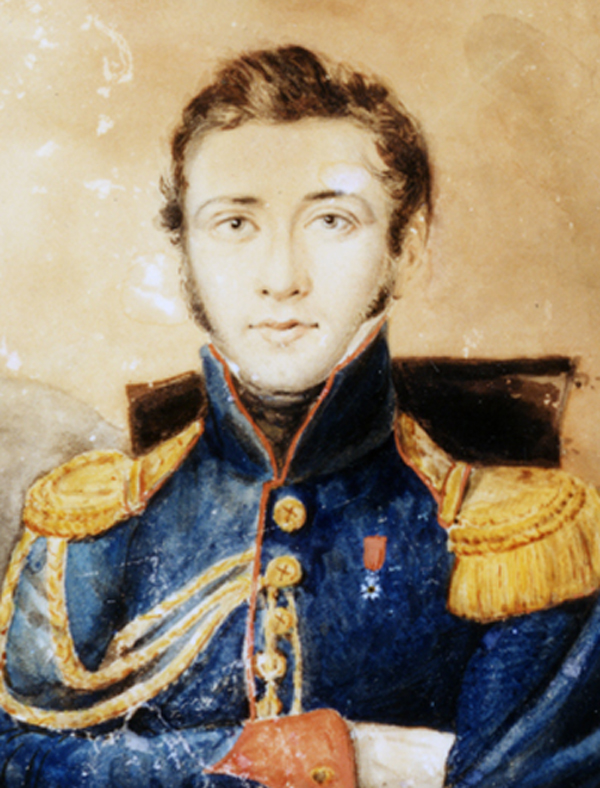
PIERRE BENJAMIN BUISSON was born May 20, 1793 in Paris, France. His father Claude Buisson was a soldier in the French Army. He graduated from the L’Ecole Polytechnique Military Academy of Paris in 1813, received further education at the Fortress of Metz, and served in the Sixth Artillery of Napoleon’s Army.
In 1815, Buisson immigrated to the United States, settling in Donaldsonville, Louisiana in 1816. He opened a school that same year in Donaldsonville. By 1823, Buisson was an engineer for the Louisiana Board of Public Works and was engaged in a project to improve the Bayou Lafourche. In 1826, he married Marie Louise Delphine de la Barre and the couple had two children, a son and a daughter. By 1832, Buisson was residing in New Orleans and was serving as the City Surveyor of the First Municipality. He was the principal engineer for the construction of the New Orleans waterworks. In 1840, Buisson oversaw the construction of the U.S. Mint building in New Orleans. His distinguished career included the position of State Engineer of Louisiana. He designed and oversaw the construction of fortifications at the Rigolets and Lake Pontchartrain. At the outbreak of the Civil War, Buisson joined the Confederate Army. He attained the rank of Captain in the Engineer Corps. Buisson died in 1871 and was buried in the St. Louis No. 3 Cemetery in New Orleans.
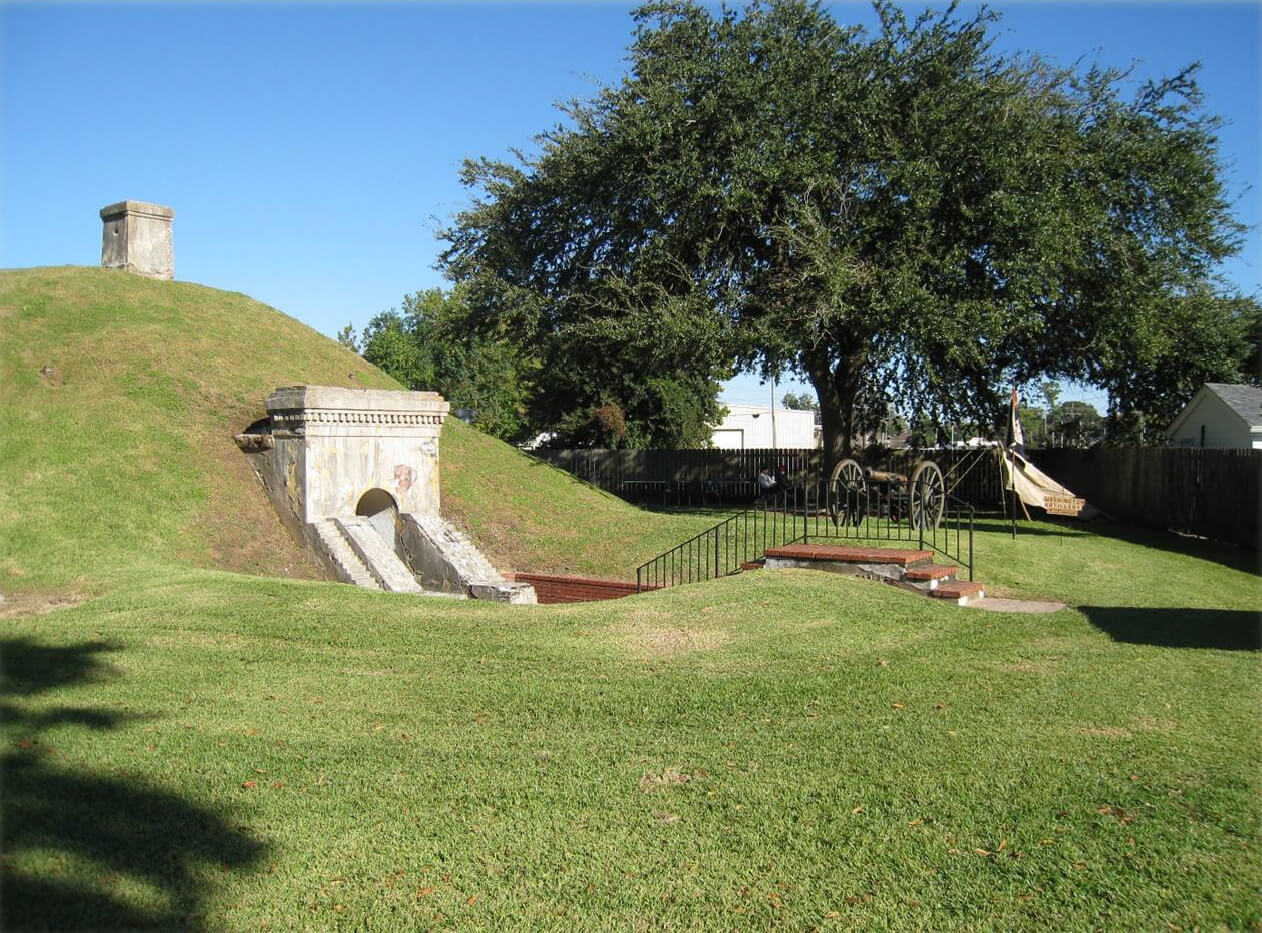
The main fortification began to take shape by mid-summer 1861 and became known as Camp Parapet. It was a massive earthwork fortification, 7,000 feet in length, extending from the Mississippi River across the Metairie Ridge and the New Orleans Canal. The construction was done with conscripted slave labor. Thousands of enslaved people were brought in from surrounding parishes. Many of these men were owned by prominent sugar planters. It has been estimated that at any given time, between 1,500 to 2,000 enslaved people were working on the fortification. It was built with a series of 17 batteries, including a large main battery designed to protect the Mississippi River. It was defended on its flanks by Metairie Ridge and the New Orleans Canal. The original fortification contained a moat and a twenty-foot-high earthwork. Inside the fortification were several powder magazines and an underground room for soldiers to gather before attacking. At the time of its completion, it was considered one of the largest and most advanced fortifications in the South. Construction of the fortification did not keep pace with the building of the large Federal armada that was destined to attack New Orleans.
On April 25, 1862, following the rapid fall of Forts Jackson and St. Phillip, Admiral Farragut’s fleet steamed up the Mississippi River and demanded the surrender of New Orleans. With New Orleans undefended from the river and the city’s fate sealed, Confederate forces occupying Camp Parapet were ordered to abandon the fortification. The forces included the Crescent Regiment, the 20th Louisiana, the 22nd Louisiana, and the 21st Louisiana. Following the abandonment of the fortification, the Federal Navy occupied Camp Parapet and the area was renamed “Camp Parapet” by the Union forces. By this time, it was clear that New Orleans was to be the main headquarters for Union operations in the Lower Mississippi. The Federal Government decided to strengthen the fortifications of Camp Parapet. By the end of 1862, thousands of Federal troops occupied Camp Parapet, including the 13th Connecticut, the 17th Connecticut, the 23rd Connecticut, the 26th Massachusetts, the 75th New York, the 162nd New York, the 13th Maine, and the 25th Maine. The occupation of Camp Parapet by Union forces was a critical element in the subsequent campaign to capture Port Hudson and Vicksburg, and cut off the Trans-Mississippi Department.
The next prominent engineer associated with Camp Parapet was Col. Joseph K. Rickett. Rickett was a graduate of the U.S. Military Academy at West Point. Following the completion of the original fortifications, he strengthened the defenses of Camp Parapet. These defenses included a ditch, a parapet, and the construction of numerous gun emplacements. He also expanded the fortification to the west side of the Mississippi River. In July of 1863, after the fall of Port Hudson, Rickett was ordered to Texas as the Chief Engineer of the Department of the Gulf. He directed the construction of fortifications at Brazos Santiago, Fort Brown, and other installations. Rickett was also involved in military operations on the Rio Grande. In July of 1865, he was mustered out of the Army. He returned to New Orleans where he was appointed City Surveyor. His most notable work was his involvement in the construction of the jetties at the mouth of the Mississippi River. In 1879, he was appointed to the position of Chief Engineer of the State of Louisiana and died in 1883.
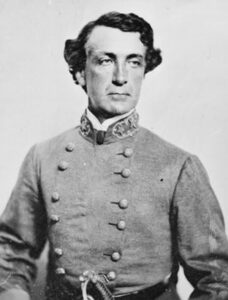
WILLIAM P. JOHNSTON was born in Louisville, Kentucky, in 1843. After his elementary education, he received further education at the Louisville Collegiate Institute. When the Civil War broke out, Johnston was a student at Washington College in Lexington, Virginia, and in 1861, at the age of 18, he left college and joined the Confederate Army. He was assigned to the 11th Louisiana and served as an aide-de-camp to his father, Brigadier General Albert Sidney Johnston. He participated in the Battle of Shiloh where his father was killed. After Shiloh, he became the aide-de-camp for Brigadier General William Preston. In 1863, Johnston was assigned to the office of Jefferson Davis, President of the Confederacy. He was captured by Federal forces near Charlotte, North Carolina on May 3, 1865, and was imprisoned at Fort Delaware. After the war, Johnston moved to New Orleans, where he became a distinguished lawyer and an important civic leader. He was one of the incorporators of the Board of Administrators of the Tulane Educational Fund in 1882. In 1884, he became the first president of Tulane University of Louisiana, a position he held until his death in 1899. The main administrative building on the Tulane University campus is named for him.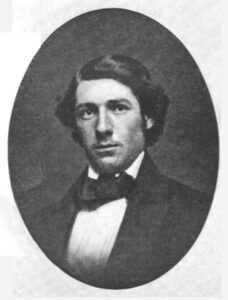
BENJAMIN MORGAN HARROD was born in New Orleans, Louisiana, in 1837. He attended Harvard University, receiving a degree in Engineering. At the start of the Civil War, Harrod was studying in Berlin, Germany. He returned to New Orleans in 1861 and joined the Confederate Army as an engineer. His first assignment was to Camp Parapet, where he served as an engineer. Later, he was assigned to Vicksburg, where he assisted in the construction of the city’s Mississippi River batteries that proved too strong to capture by assault. Harrod rose to the rank of Captain as an aide to Smith. Taken prisoner when Vicksburg fell, Harrod spent the next fourteen months in Alabama awaiting exchange.
On October 18, 1864, when finally exchanged, Harrod was appointed Captain of Company G in the Second Confederate Engineering Troops, in Lee’s Army of Northern Virginia. Harrod remained with Lee’s army until its final surrender on April 9, 1965.
Harrod returned home to New Orleans. From 1877 to 1880 he was Chief Engineer for the State of Louisiana. He was a member of the Louisiana River Commission from 1879 to 1904. From 1888 to 1902 he was Chief Engineer of the City of New Orleans and directed the city’s water and sewerage construction projects. He then served as a Commissioner on the Panama Canal Commission from 1904 to 1907. He was responsible for the design and construction of many of the educational buildings on the campus of Tulane University. His extensive art collection was willed to the New Orleans Museum of Art and placed in the Delgados’ collection.
Flags Flown Over Camp Parapet During The War Between the States (1861-1865)
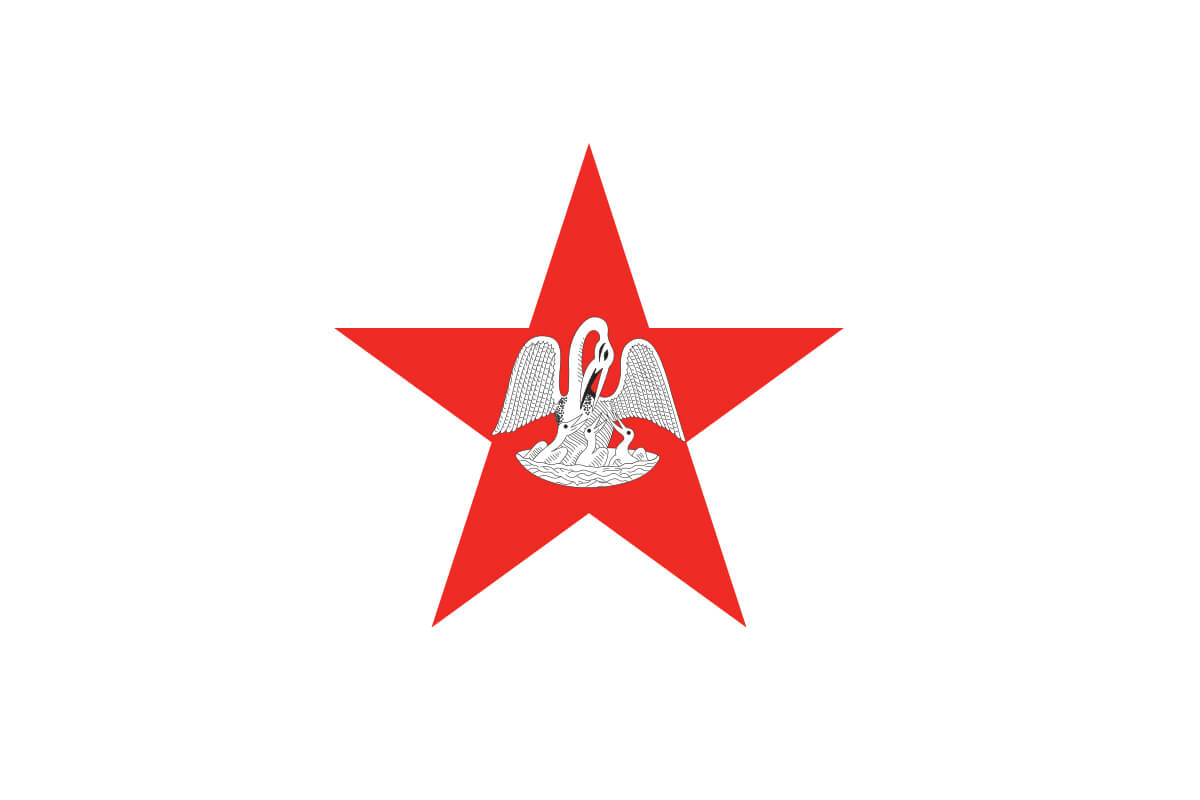
LOUISIANA SECESSION FLAG
Louisiana became the sixth state to formally secede from the Union on January 26, 1861. Prior to this date, on December 21, 1860, when word had been received that South Carolina had seceded from the Union, a flag known as the “Pelican Flag” was hoisted from the third story window of the Southern Rights Association building in Baton Rouge. It became the Louisiana Secession Flag. As you can see, the flag has a spotless white background with the addition of a 5-pointed red single star containing the pelican feeding her chicks. The Louisiana Secession Flag was replaced two months later with the Republic of Louisiana Flag.
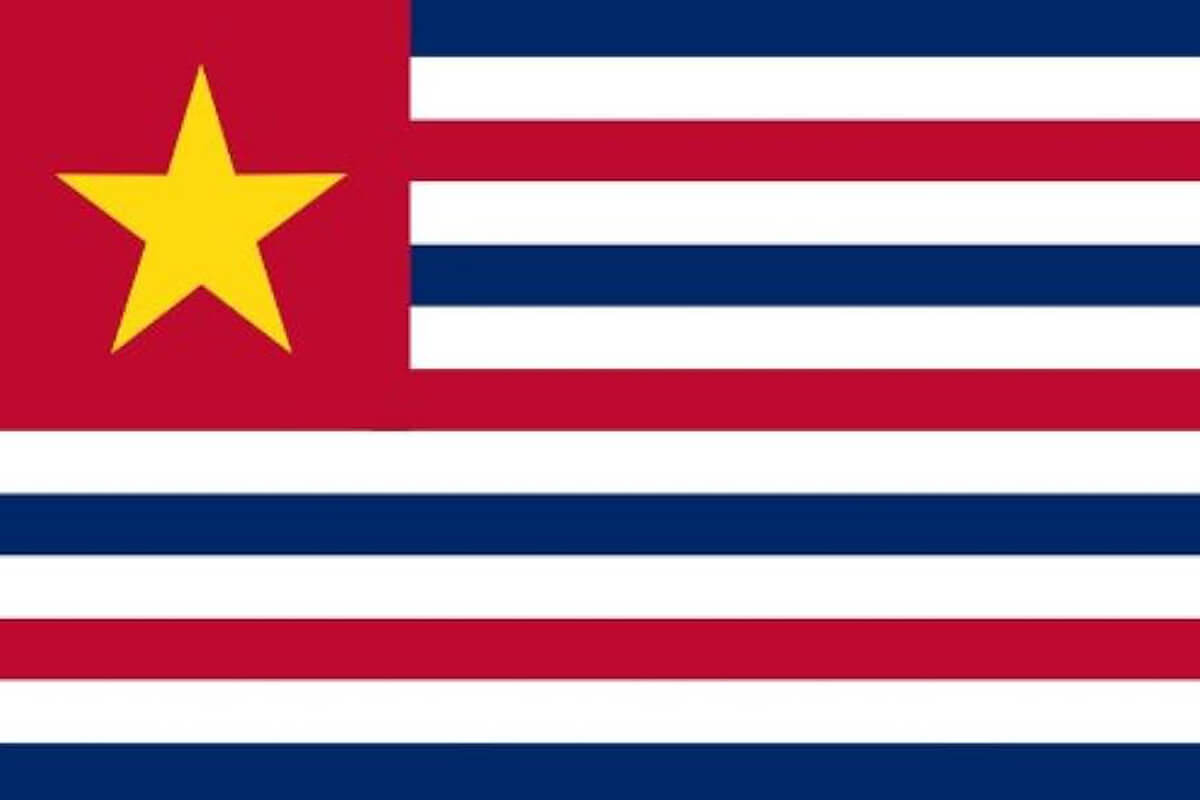
REPUBLIC OF LOUISIANA FLAG
This was the flag of the independent nation of the Republic of Louisiana. It was a modified version of the National Flag of the United States. The flag was based on Louisiana’s strong ancestry. The 13 stripes represent the 13 original colonies of America. However, its stripes repeat the colors of blue, white, and red, the colors of the flag of France, Louisiana’s mother country. The canton had a single gold star placed on a field of red, the colors of the flag of Spain, which once held dominion over Louisiana. 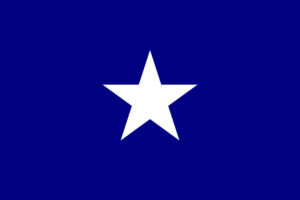
BONNIE BLUE FLAG
The Bonnie Blue Flag was an unofficial banner of the Confederate States of America at the start of the American Civil War in 1861. It consists of a single, five-pointed white star on a blue field. It closely resembles the flags of the short-lived Republic of West Florida of 1810. A symbol of secession, it was especially popular during the War’s early years and it was flying above the Confederate batteries that first opened fire on Fort Sumter, beginning the Civil War. 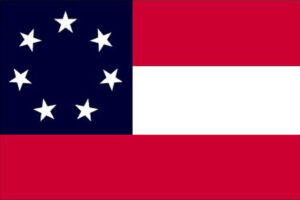
FIRST NATIONAL FLAG OF THE CONFEDERATE STATES OF AMERICA “STARS AND BARS” (7 STARS)
The Provisional Congress of the Confederacy, which was in session in Montgomery, Alabama, established a committee to find a flag to represent the new nation. Prussian artist Nicola Marschall designed the flag in Marion, Alabama. On March 4, 1861, the body known as the Committee on a Proper Flag for the Confederate States of America presented the new flag. The flag was flown for the first time over the Capital Building in Montgomery. The First National Flag of the Confederate States of America was called the “Stars and Bars”. This flag was used from March 4, 1861 through May 21, 1861. 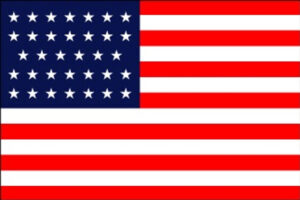
FLAG OF THE UNITED STATES OF AMERICA (34 STARS)
This flag became the official United States Flag on July 4, 1861. A star was added for the admission of Kansas as a state (January 29, 1861) and was to last for two years. The only President to serve under this flag was Abraham Lincoln (1861-1865).
Anthems at Camp Parapet during the Civil War
During the American Civil War, neither the United States nor the Confederate States of America had an official national anthem. The current U.S. national anthem, “The Star-Spangled Banner,” was not officially adopted until 1931.
French Influences: “La Victoire Est À Nous” and “La Marseillaise”
Louisiana, with its significant population of French descent, maintained close ties to its French heritage throughout the 19th century, often following news from France. After Napoleon’s fall, many of his soldiers sought new lives in Louisiana, bringing with them tales of their Napoleonic battlefield experiences.
One notable tune, “La Victoire Est À Nous” (“Victory Is Ours”), originated as an air from the 1783 opera La Caravane du Caire by André Grétry. It was later adapted as a military march by David Buhl and was famously played when Napoleon’s Grande Armée captured Moscow in 1812. This song would have been well-known throughout Louisiana in the 1860s and was reportedly played in the streets when secession was proclaimed. While primarily an instrumental march, lyrics for “La Victoire Est À Nous” did exist, though they were rarely sung at parades:
“La Victoire Est À Nous” (André Grétry)
La Victoire Est À Nous (bis);
Saint-Phar, par son courage,
De la mort, du pillage
Nous a préservés tous.
English Translation:
The Victory Is Ours, (repeat)
Saint-Phar, by his courage,
Has saved us all from
Death and pillage.
When Louisiana seceded from the Union in January 1861, its citizens, with their strong French ancestry, hailed their new independent republic with “La Marseillaise”. This march became the official anthem of France in 1879, and it could be said that “La Marseillaise” was Louisiana’s original anthem.
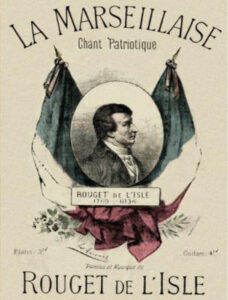
“La Marseillaise” (Claude Rouget de Lisle, 1792)
Allons enfants de la Patrie,
Le jour de gloire est arrivé!
Contre nous de la tyrannie,
L’étendard sanglant est levé! (bis)
Entendez vous dans les campagnes
Mugir ces féroces soldats ?
Ils viennent jusque dans nos bras
Égorger nos fils et nos compagnes!
(Refrain)
Aux armes, mes citoyens!
Formez vos bataillons!
Marchons! Marchons!
Qu’un sang impur
Abreuve nos sillons!
English Translation:
Arise children of the Fatherland,
The day of glory has arrived!
Against us tyranny’s
Bloody standard is raised,
Listen to the sound in the fields,
The howling of these fearsome soldiers?
They are coming into our midst,
To cut the throats of your sons and consorts
(Refrain)
To arms citizens!
Form your battalions!
March! March!
Let impure blood
Water our furrows!
Southern Anthems: “The Bonnie Blue Flag” and “Dixie”
When Mississippi seceded from the Union in January 1861, a flag with a single white star on a blue field was flown from its capitol dome. Harry Macarthy helped popularize this flag as a symbol of independence by writing the popular song “The Bonnie Blue Flag” in early 1861. Some seceding Southern states incorporated this motif into their new state flags. “The Bonnie Blue Flag” was used as an unofficial flag during the early months of 1861 and was flown above the Confederate batteries that first opened fire on Fort Sumter, marking the start of the Civil War. The flag came to symbolize secession, self-governance, and state sovereignty. Many military units also carried their own regimental flags into battle.
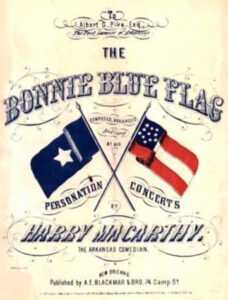
“The Bonnie Blue Flag” (Harry Macarthy)
We are a band of brothers and native to the soil
Fighting for the property we gained by honest toil
And when our rights were threatened, the cry rose near and far
Hurrah for the Bonnie Blue Flag that bears a single star
Hurrah! Hurrah!
For Southern rights, hurrah!
Hurrah for the Bonnie Blue Flag that bears a single star
As long as the Union was faithful to her trust;
Like friends and like brethren, kind were we, and just.
But now, when Northern treachery attempts our rights to mar,
We hoist on high the Bonnie Blue Flag that bears a single star.
(Chorus)
First gallant South Carolina nobly made the stand
Then came Alabama and took her by the hand
Next, quickly Mississippi, Georgia, and Florida
All raised on high the Bonnie Blue Flag that bears a single star, (Hurrah)
(Chorus)
Ye men of valor gather round the banner of the right
Texas and fair Louisiana join us in the fight.
Davis, our loved President and Stephens statesmen rare;
Now rally round the Bonnie Blue Flag that bears a single star.
(Chorus)
Now here’s to brave Virginia, the Old Dominion State,
With the young Confederacy at last has sealed her fate,
And spurred by her example, now other states prepare;
To hoist high the Bonnie Blue Flag that bears a single star.
(Chorus)
Then cheer, boys, cheer, raise a joyous shout;
For Arkansas and North Carolina now have both gone out.
And let another rousing cheer for Tennessee be given,
The single star of the Bonnie Blue Flag has grown to be eleven.
(Chorus)
Then here’s to our Confederacy, strong we are and brave,
Like patriots of old we’ll fight, our heritage to save;
And rather than submit to shame, to die we would prefer,
So cheer for the Bonnie Blue Flag that bears a single star.
Dixie
The song “Dixie,” originally composed for a minstrel show, became an audience favorite after being performed in New Orleans in 1860. On February 18, 1861, “Dixie” was re-arranged as a march for the inauguration of Jefferson Davis as President of the Confederate States of America. A military band played the tune, and from that point on, “Dixie” became the unofficial anthem of the CSA. Interestingly, “Dixie” was also a favorite song of President Abraham Lincoln, and at his request, it was performed at the White House when General Robert E. Lee’s Confederate Army surrendered on April 9, 1865.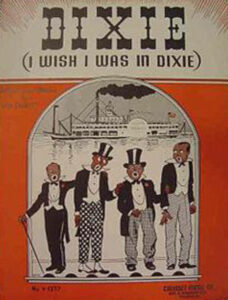
“Dixie” (Dixie’s Land) (Daniel Decatur Emmett, 1859)
Oh, I wish I was in the land of cotton,
Old times there are not forgotten.
Look away, look away, look away Dixie Land!
In Dixie Land, where I was born in, early on one frosty
Morning look away, look away, look away Dixie Land!
I wish I was in Dixie, hooray! Hooray!
In Dixie Land I’ll take my stand, to live and die in Dixie.
Away, away, away down South in Dixie!
Away, away, away down South in Dixie!
Union Anthem: “Hail Columbia”
“Hail Columbia” was originally composed for the inauguration of President George Washington in 1789. It served as the unofficial anthem of the United States for many years thereafter, including during the Civil War. Today, “Hail Columbia” is the official anthem of the Vice President of the United States.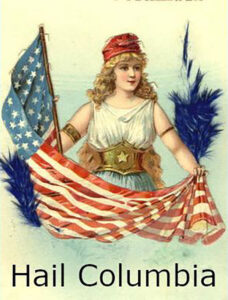
“Hail Columbia” (Philip Phile and Joseph Hopkinson, 1789)
Hail Columbia, happy land!
Hail, ye heroes, heav’n-born band,
Who fought and bled in freedom’s cause,
Who fought and bled in freedom’s cause,
And when the storm of war was gone
Enjoy’d the peace your valor won.
Let independence be our boast,
Ever mindful what it cost;
Ever grateful for the prize,
Let its altar reach the skies.
Chorus:
Firm, united let us be,
Rallying round our liberty,
As a band of brothers joined,
Peace and safety we shall find.
The Star-Spangled Banner
Our present national anthem, “The Star-Spangled Banner,” was penned in September 1814 by Francis Scott Key. Key’s poem and song recounted the British bombardment of Fort McHenry in Baltimore Harbor. Key was a close friend of fellow attorney Roger Taney, who married Key’s sister Anne and later became Chief Justice of the United States. During the Civil War, Key’s grandson, Francis Key Howard, was imprisoned in the very same Fort McHenry for expressing his pro-Confederate views.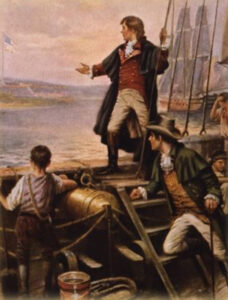
“The Star-Spangled Banner” (Francis Scott Key, 1814)
Oh, say can you see by the dawn’s early light;
What so proudly we hailed at the twilight’s last gleaming
Whose broad stripes and bright stars,
Thru the perilous fight,
O’er the ramparts we watched were so gallantly Streaming.
And the rocket’s red glare, the bombs bursting in air,
Gave proof through the night that our flag was still There.
Oh, say does that Star Spangled Banner yet wave,
O’er the land of the free and the home of the brave.
Bibliography and Reading on Camp Parapet
For firsthand accounts of camp life at Camp Parapet, the following books are recommended reading:
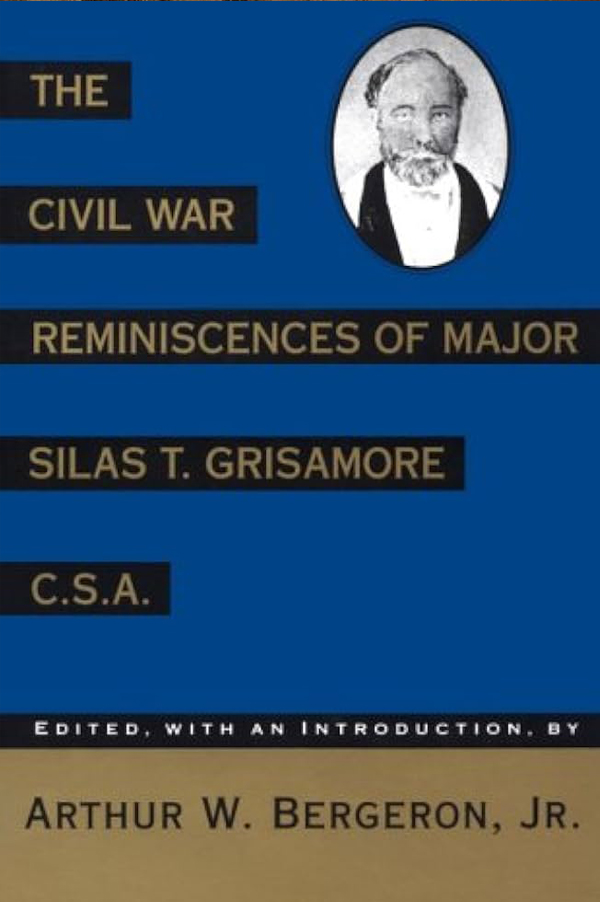
- The Civil War Reminiscences of Major Silas T. Grisamore, C.S.A.
Edited by: Arthur W. Bergeron, Jr.
Publisher: Louisiana State University Press, 1993
Major Grisamore served as the Quartermaster of the 18th Louisiana Infantry Regiment. The commanding officer of this regiment was Colonel Alfred Mouton, who was the son of a former Louisiana Governor. The 18th Regiment was tasked with protecting the construction of the Carrollton Defenses from October 9, 1861, to January 3, 1862.
Grisamore’s work was originally published as a series of newspaper articles in the Weekly Thibodaux Sentinel between April 27, 1867, and December 2, 1871, under the pseudonym “Uncle Silas”. While the book covers the entire wartime service of the 18th, its narrative is described as both folksy and straightforward. It provides one of the few descriptions of the defense line that eventually became Camp Parapet during Confederate control.
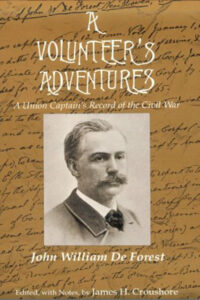
- A Volunteer’s Adventures: A Union Captain’s Record of the Civil War
Edited by: James H. Croushore
Author: John William De Forest
Publisher: Louisiana State University Press, 1946
Captain John William De Forest served in the 12th Connecticut Volunteer Infantry. This regiment was assigned to the New England Division as part of General Benjamin Butler’s army, which occupied South Louisiana. From May 1862 until January 1864, the 12th Connecticut was stationed at or around Camp Parapet.
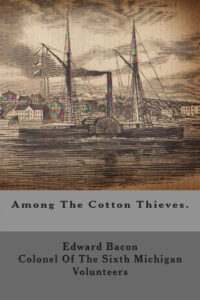
- Among The Cotton Thieves
Author: Edward Bacon, Colonel Of The Sixth Michigan Volunteers
Publisher: The Everett Companies, Bossier City, Louisiana, 1989This work offers a distinct perspective, differing from typical Southern or Yankee viewpoints. Colonel Bacon’s narrative was originally published in 1867 by The Free Press Steam Book and Job Printing House of Detroit. Bacon provides an account of the difficult conditions that Federal soldiers experienced at and around Camp Parapet.
- History of Camp Parapet
Author: Shannon Lee Dawdy and Christopher N. Matthews
Publisher: The Jefferson Parish Historical Commission
Delve into the rich history of the Camp Parapet area, a significant tract of land in Jefferson Parish, Louisiana. Situated directly across the Mississippi River from Nine Mile Point, this region spans approximately 0.5 miles wide by two miles deep, bordered by Severn Avenue, Coolidge Street, the Mississippi River, and Forty-fifth Street. The historical summary covers the period from the initial European settlement through the mid-twentieth century, with a particular focus on the Civil War era and the historical significance of Camp Parapet itself.